How Long Does Bail Take at Guilford County Jail
The first question most Greensboro families ask after a loved one is booked is simple and urgent. How long until they come home. The clock starts at arrest and runs through a set series of steps inside the Guilford County Detention Center at 201 S Edgeworth St, Greensboro, NC 27401. The Magistrate’s Office on the same campus works all hours. When everything lines up, release after a bond posts normally falls in the 2 to 4 hour range. During heavy intake or shift change, it can push longer. When paperwork is tight and the bondsman is already at Edgeworth Street, it can move faster than people expect.
Why timing at the Guilford County Jail looks the way it does
Greensboro is a large city, and the detention center is busy. Arrests from Downtown Greensboro, College Hill, Fisher Park, Lindley Park, Adams Farm, Friendly Center, Glenwood, Irving Park, and the Battleground Avenue and Wendover Avenue corridors all come through the same intake. The High Point area runs its own facility at 507 East Green Drive, but most Greensboro cases land at 201 S Edgeworth St. The same building hosts the magistrate, which helps because the bond decision sits just down the hall from booking. That layout saves time compared to counties where the magistrate sits offsite.
The main drivers of release time are known and predictable. Intake volume, the timing of the bond decision, whether the charge triggers extra review, how complete the bond paperwork is, and whether the bond is secured by cash, property, or a surety bond all matter. A surety bond is the common bail bond families use when they hire a licensed bondsman to guarantee the full bond to the court. Once the magistrate sets the conditions, the detention center will not begin release until a valid bond reaches the booking desk, the jail confirms identity and court dates, and the shift finishes its checks.
What happens inside the jail between arrest and release
The sequence starts at intake. Officers bring the defendant to the detention center. Booking staff collect fingerprints, photos, and basic information. The person waits for the bond decision from the magistrate. Under N.C. Gen. Stat. §15A-534, the magistrate must set conditions of pretrial release. Conditions can be a written promise to appear, unsecured bond, or secured bond. A secured bond means money or a surety must back the release. A written promise to appear is a signature release and is the least restrictive form. Under Iryna’s Law, discussed below, signature release narrows after December 1, 2025, especially on violent charges. The magistrate can also order house arrest with electronic monitoring. House arrest with electronic monitoring means the person must stay at a set place and wear a tracking device.
Once the conditions are set, families can move. If the bond is secured, a surety bond is the most common path. The bondsman files the bond with the magistrate’s office or the jail’s bond window. Staff verify the bond, scan it into the system, and send it back to booking. The jail updates the record, checks for holds, and builds the release packet. The person is called to property to sign and pick up items. After final checks, release at the public exit follows.
When all documents are clean, Greensboro release time commonly runs 2 to 4 hours after the bond is filed. During quiet hours it can be closer to 90 minutes. During peak hours, shift change, or when the person has multiple charges, it can take longer. If the charge involves domestic violence or a protection order, there may be a hold period before the jail will release. Domestic cases sometimes include a cool-off period, which means a timed delay ordered by law or policy.
How long does it take tonight at 201 S Edgeworth St
Time of day matters. Late-night calls often lead to faster handoffs with the magistrate because the office is right there. The most common slowdowns around midnight are staffing and transport of multiple arrestees arriving at once from Downtown and the Gate City Boulevard corridor. Early morning can run slower around shift change. Late afternoon can slow when the court day ends and paperwork from the courthouse at 201 S Eugene St arrives in batches. Weekend volume can spike after events along Elm Street and South Elm, but the timeline still follows the same 2 to 4 hour band once the bond is filed.
There is a practical and local reason some releases move quicker. A bondsman who operates one block from the detention center can walk bond forms to the right window, correct small issues on the spot, and return to the magistrate in minutes if a signature is missing. Distance adds minutes at each handoff. Greensboro families who have documents ready, a co-signer on standby, and clear contact with the bondsman tend to see the shorter end of the range.
What the magistrate considers when setting bond
North Carolina’s pretrial release law sits in N.C. Gen. Stat. §§ 15A-531 through 15A-535. The court must consider the risk of failing to appear, the risk to public safety, and the risk of interfering with justice. A secured bond is money or a bond that backs the promise to come to court. An unsecured bond is a written obligation to pay only if the person misses court. A written promise to appear is a signature with no payment unless the person fails to appear. In some categories, the court imposes house arrest with electronic monitoring. Electronic monitoring is a device that tracks location at all times.
On certain charges, Iryna’s Law (Session Law 2025-93) changes the defaults starting December 1, 2025. The law creates a rebuttable presumption against release for violent offenses. A rebuttable presumption means the default assumption stands unless the defense shows evidence that overcomes it. For a first violent offense, the judicial official must impose either a secured bond or house arrest with electronic monitoring. For a second violent offense, house arrest with electronic monitoring is mandatory. Defendants with three or more prior convictions face a secured bond requirement. The law also eliminates written promises to appear as a release option under G.S. 15A-534(a), which means bail bond payment signature-only releases are not allowed after that effective date. In real terms, more defendants in Guilford County will face secured bonds after December 1, 2025, and those bonds can lengthen the time between arrest and release if families are not ready to post quickly.
How long large bonds take in Guilford County
Six-figure bonds clear the same operational path as small bonds. The difference is in underwriting and collateral. When the bond is $100,000 or higher, the bondsman normally asks for a stronger co-signer and may require collateral. Collateral is property that secures the bond in case the defendant misses court. Even with collateral, once the bond is accepted at the detention center, the release window still usually sits in the 2 to 4 hour range. In documented Greensboro cases at 201 S Edgeworth St, bonds as high as $250,000 have completed filing and release in under 2 hours when all co-signers and collateral documents were ready and the bond was walked straight to the correct jail window without delay. These outlier fast timelines depend on clean paperwork and immediate access to the magistrate and booking staff.
Why some Greensboro releases take longer than 4 hours
Delays stack. If the charge triggers a mandatory hold, the clock does not start until that hold expires. If there is an out-of-county warrant or an ICE detainer, the jail may not release at all. If the defendant has a failure to appear history, the magistrate may set tighter conditions. Failure to appear means missing a court date, which triggers bond forfeiture risk. Bond forfeiture is the legal process that demands payment of the bond if the person does not show up in court. Under G.S. 15A-544.5, the clerk follows a 90-day bond forfeiture timeline in most cases, which is the period during which the bondsman and co-signers can resolve the missed court date before final judgment. When the jail must gather records from multiple counties, it slows the release check. If the booking system is handling several dozen releases at once, each packet waits its turn.
What families can do right now to cut time
Greensboro families help the timeline by lining up core details early. The jail will ask for the defendant’s full legal name and date of birth. The detention center can confirm a bond number at (336) 641-2700, but call volume can be high. The county inmate search at https://inmatesearch.guilfordcountync.gov/ helps confirm location and booking status. The bondsman will need the charge, the bond amount, the magistrate’s conditions, and a co-signer. A co-signer is the person who guarantees the bond and agrees to be financially responsible if the defendant skips court. A current address, employer information, and a valid photo ID move underwriting faster.
Common Greensboro timing benchmarks
From arrest to booking can take 30 to 120 minutes depending on transport. From booking to the bond decision often falls within 1 to 3 hours when the magistrate is not handling a docket surge. From bond filing to release, expect 2 to 4 hours at 201 S Edgeworth St during normal flow. At the High Point Detention Center, located at 507 East Green Drive, High Point, NC 27260, phone (336) 641-7900, the release window is similar, but paperwork handoffs are handled through their on-site magistrate. The Guilford County Courthouse at 201 S Eugene St hosts first appearances and bond motions during business hours, which can change bond conditions and affect the release path.
How “bail bond payment plans Greensboro” connect to speed
Families call late at night because the bond was set higher than they can pay at once. In North Carolina, N.C. Gen. Stat. §58-71-95 caps the bail bond premium at 15 percent of the bond amount or 150 dollars, whichever is greater. The premium is the fee paid to a licensed bondsman to write the surety bond. It is non-refundable because it pays for the surety’s risk. Many Greensboro families ask for bail bond payment plans because they have part of the premium tonight and the rest on payday. When a bondsman can approve payment terms quickly, the bond reaches the jail sooner, which shortens the total time to release. If a family spends hours chasing high-interest personal loans to cover the full premium up front, release can slip into the next day.
The practical choice many Greensboro families make is a down payment tonight with installments over time. Some agencies offer half down and half later. Some accept five percent down on bonds of $5,000 and up for qualified co-signers. Zero-interest terms on financed premium balances up to $1,000,000 exist in this market. Interest-free means the family does not pay extra finance charges over the premium. That structure avoids payday or title loan traps that can run triple-digit APRs. Fast underwriting and on-site filing at Edgeworth Street do more to keep the timeline at 2 to 4 hours than any other factor families can control.
What affects whether collateral is needed and how that changes timing
Collateral decisions often track the charge, the bond amount, and the defendant’s history. For a $2,000 to $7,500 bond on a first-time misdemeanor out of Downtown Greensboro, a strong co-signer with stable employment and a permanent local address can often qualify with no collateral. No collateral means the co-signer’s promise and the premium are enough. For larger bonds or higher-risk charges, collateral may be required. Common options include car titles with a temporary lien, a real estate deed of trust on a home that carries 100 percent equity, stocks or securities, or high-value jewelry and electronics. A deed of trust is a recorded document that secures an interest in real property. 100 percent equity means no mortgage or liens remain on the property.
Collateral adds documents. A car title requires proof of ownership and a lien filing. Real estate requires a deed of trust drafted to North Carolina standards and signed by the owner. These steps add time if the documents are not ready. When families plan for collateral early, they can bring the title, proof of equity, utility bill for address verification, and ID to the bondsman’s Greensboro office. That reduces back-and-forth and keeps the release window tight once the bond is filed.
Co-signer qualifications that speed approval
Bondsmen in Guilford County tend to look for similar thresholds. A co-signer who is at least 25 years old, has 12 months of continuous employment, can show two current pay stubs, has an open checking account, and lives within 45 miles of the Guilford County Courthouse will usually move through approval quickly. Proof of residence by a utility bill with the current address helps. A 24-month local residency is preferred in many cases. Strong employment or homeowner status can offset thin credit on some files. If the defendant lives and works in Greensboro or within zip codes like 27401, 27403, 27405, 27406, 27407, 27408, 27409, 27410, and 27455, the local ties weigh in favor of quick approval because they lower the perceived flight risk.
Bond motions and when they matter to timing
Sometimes the first bond is too high. Defense counsel may file a bond motion with the Guilford County Courthouse at 201 S Eugene St to reduce the bond or change conditions. A bond motion is a formal request to a judge to set a new bond or adjust release terms. Filing and hearing that motion can take days during busy dockets. When Iryna’s Law applies to a violent offense after December 1, 2025, the judge must make written findings of fact explaining the decision, which takes time but also creates a record a lawyer can use on appeal. Written findings of fact means the judge writes specific reasons, in detail, for the decision. On lower-level charges, a defense attorney can often contact the District Attorney’s Office and seek consent to modify the bond, which speeds the hearing or eliminates the need for one. On domestic cases with no-contact orders, a judge may pair release with house arrest and electronic monitoring after reviewing the AOC-CR-200 form, which is the standard pretrial release form used in North Carolina.
What families should have ready before the bondsman call
Speed comes from preparation. The fastest releases in bail bond payment plans Greensboro Greensboro happen when the caller has the defendant’s full name, date of birth, booking number, charge, bond amount, and the magistrate’s bond conditions. The jail desk at (336) 641-2700 can confirm the booking number once the person clears intake. The Guilford County inmate search site also helps when phone lines are busy. A co-signer with a valid photo ID, proof of employment, and a current utility bill makes underwriting faster. If collateral is needed, bring titles, deeds, or proof of equity. If financing is needed, discuss down payment options, the payment schedule, and how installments will be made. Digital document signing can move the file even if the co-signer is at home in Starmount or Sedgefield and cannot reach Downtown immediately.
- Defendant’s full name and date of birth Booking number from the jail or inmate search Exact bond amount and magistrate’s conditions Co-signer ID, pay stubs, and current utility bill Collateral documents if required, like a car title or deed
How High Point arrests impact timing for Greensboro families
Families in Jamestown, Oak Ridge, and High Point often ask if Greensboro bondsmen can post at the High Point Detention Center. The answer is yes. The High Point facility at 507 East Green Drive has its own intake and on-site magistrate. Release times mirror Greensboro with the same 2 to 4 hour pattern after filing. If the defendant is transported from High Point to Greensboro or the reverse, add transport time before release. Coordination between facilities is common on weekends, and it can add an hour or more depending on staffing and vehicle availability.
Legal checkpoints that can slow or speed release
Several North Carolina rules affect speed. The magistrate must consider a person’s criminal history report before setting bond. A criminal history report is a summary of past charges and convictions. Under Iryna’s Law, certain violent charges face a rebuttable presumption against release and tighter conditions. After December 1, 2025, written promises to appear are not an option, which means even low-level cases may require an unsecured or secured bond. In practical terms, Greensboro families should plan for a secured bond more often. When the bond requires a secured appearance bond, the surety bond route moves faster than raising full cash, because the family only needs to cover the state-regulated premium with the bondsman rather than the entire bond in cash at the jail window.
The Eighth Amendment to the U.S. Constitution and Article I, Section 27 of the North Carolina Constitution prohibit excessive bail. Excessive bail means a bond so high it is used to punish instead of to ensure court appearance and safety. Guilford County judges hear bond motions during the week and can adjust bonds that do not meet the legal standard. If the magistrate sets a bond late at night and the family cannot meet it, a defense attorney may advise waiting for the first appearance or filing a motion to seek reduction. That choice adds time but can save money and change conditions like house arrest.
What happens after the bond is posted
Once the surety bond is filed and accepted, the jail follows set steps. Staff confirm identity, confirm the next court date, check for outside holds, run a final warrant check, and prepare the personal property release. The person signs for property, receives court papers, and exits through the public release door. The jail will not speed this last stage for any agency or family. Being one block away does not change internal jail checks, but it does cut minutes from paperwork handoffs when questions come up. A small correction on a bond form can be handled at the window rather than through a drive back and forth, which is where local proximity helps the most.
How payment method influences the clock
Families in Greensboro often pay premiums by card, cash, or online transfer. Cards and online payments clear faster than personal checks. Some agencies accept Zelle. If a payment plan is approved, digital signatures and a quick down payment can put the bond at the window while the rest of the installments draft later. Delays due to banking issues are common when large card payments trigger fraud checks. Let the bank know in advance if a large charge is coming. For families near Friendly Center or West Market Street, stopping by the office can speed ID verification and signature collection when digital tools are not practical.
How long it takes if the bond is denied
If the magistrate denies bond or sets conditions the family cannot meet, the timeline changes from hours to days. The next step is a bond motion or waiting for the first appearance at the Guilford County Courthouse. Defense counsel can gather records, letters from employers, treatment plans, or other facts to overcome risk concerns. When Iryna’s Law applies, the defense must rebut the presumption by showing specific reasons why release can be managed safely. Rebut means provide enough evidence to change the default assumption. If the judge orders house arrest with electronic monitoring, release will also depend on pretrial services scheduling and equipment availability, which can add hours after approval.
Guilford County numbers and places families ask for the most
Guilford County Detention Center: 201 S Edgeworth St, Greensboro, NC 27401. Phone: (336) 641-2700. Magistrate’s Office: located inside the same complex and open 24/7. Guilford County Courthouse: 201 S Eugene St, Greensboro, NC 27401. Phone: (336) 412-7300. High Point Detention Center: 507 East Green Drive, High Point, NC 27260. Phone: (336) 641-7900. Sheriff’s Office: 300 W Washington St, Greensboro, NC 27401. Phone: (336) 641-3694. The county inmate search: https://inmatesearch.guilfordcountync.gov/.
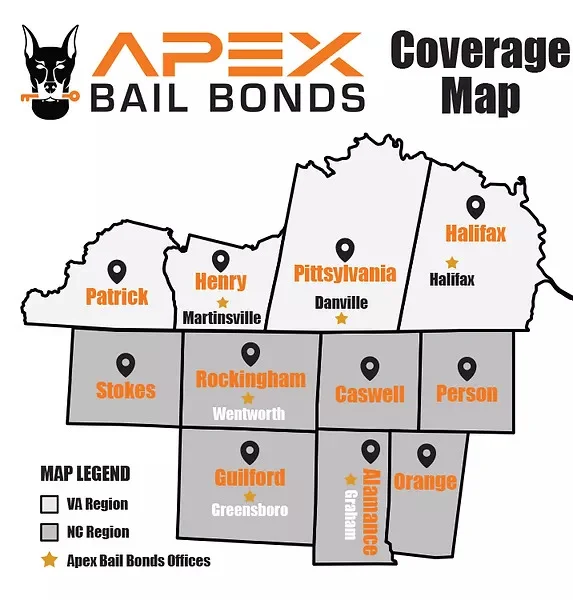
Service across Greensboro zip codes includes 27401, 27403, 27405, 27406, 27407, 27408, 27409, 27410, and 27455, with extended coverage into High Point 27260 and 27265, Jamestown 27310, Oak Ridge 27284, Gibsonville 27249, McLeansville 27301, Summerfield 27358, Pleasant Garden 27313, Stokesdale 27357, and Colfax 27235. Families in Burlington and Graham in Alamance County, and Reidsville and Eden in Rockingham County, often need cross-county coordination when court dates span multiple courthouses. That multi-county context can add a verification step, but it does not change the core 2 to 4 hour release window in Guilford County once the bond is in the system.
Shareable local takeaway for attorneys and reporters
For legal practitioners tracking pretrial changes, the most practical Greensboro shift tied to Iryna’s Law is the removal of written promises to appear under G.S. 15A-534(a) after December 1, 2025. That single change converts a subset of would-be signature releases into unsecured or secured bonds. In the detention center’s day-to-day flow, that pushes more files into surety bond processing at the jail window, which in turn makes “paperwork readiness” the rate limiter. In cases where counsel lines up a co-signer, verifies employment, and secures a quick premium decision, Greensboro release continues to meet the 2 to 4 hour mark even on high bonds. Documented local cases have cleared $250,000 bonds in under 2 hours at 201 S Edgeworth St when the bond writer was on campus and all verifications were complete at filing.
If the defendant misses court after release
Missing court creates a failure to appear and triggers a process that can lead to arrest and bond forfeiture. The clerk starts a forfeiture with a notice. Under the 90-day bond forfeiture timeline, there is a window to resolve the failure to appear by bringing the defendant to court, getting the case back on the docket, or showing a legal reason to set the forfeiture aside. Set aside means the court cancels the forfeiture. Co-signers should call the bondsman right away if a court date is missed. Waiting makes recovery harder and can lead to higher costs. The sooner the defendant is back before a judge, the better.
How families should think about cost and time the same night
Speed and cost are linked. The longer a family spends trying to raise the full cash bond, the later the filing. In North Carolina, the premium for a surety bond is capped by N.C. Gen. Stat. §58-71-95 at 15 percent of the bond amount or $150 minimum. Families who use bail bond payment plans in Greensboro avoid high-interest emergency loans and move the bond to the jail sooner. The shorter the gap between the magistrate’s decision and the bond filing, the more likely release lands in the normal 2 to 4 hour window the same night.
- Call the detention center or use the inmate search as soon as booking starts. Line up a co-signer with ID, pay stubs, and proof of address. Confirm the bond amount and any holds or special conditions. Plan the premium payment or payment plan up front. Keep the phone close. Fast answers prevent paperwork delays.
Why local proximity to Edgeworth Street changes outcomes
In Greensboro, the difference between a same-night release and a next-morning release is often measured in minutes, not hours. A bondsman one block from 201 S Edgeworth St can bring corrections back and forth between the bond window and the magistrate’s office without traffic delays. When the bond requires an extra signature or an attachment, those tasks take minutes on foot. For families in Irving Park, Green Valley, Hamilton Lakes, or the New Garden area, being able to meet at an Elm Street office saves time over driving to a remote location. That local presence matters most at night and on weekends when staffing is thin and every handoff counts.
Contact and next steps for Guilford County families ready to act
Families who are ready to move forward tonight should be prepared to provide the defendant’s name, date of birth, booking number, charges, and bond amount. If financing is needed, be ready to discuss down payment options and schedules. If collateral is needed, bring titles or deeds. Keep your phone nearby for quick questions during filing. The faster those details are confirmed, the faster the bond moves to the jail window.
Why Greensboro families call Apex Bail Bonds when minutes matter
Apex Bail Bonds serves Guilford County from 101 S Elm St, Suite 80, Greensboro, NC 27401, one block from the Guilford County Detention Center at 201 S Edgeworth St. The agency is licensed and regulated by the North Carolina Department of Insurance, NCDOI License #18812863. Owner Fred Shanks IV holds three bail bond licenses: North Carolina surety bondsman, North Carolina professional bondsman, and Virginia bondsman, which enables cross-state bond coordination across the Piedmont Triad corridor and allows below-standard premium flexibility in qualifying cases.
Apex structures bail bond payment plans in Greensboro with 0 percent interest financing on premium balances up to $1,000,000, zero financing fees, and no hidden costs. On bonds $5,000 and up, qualified co-signers may be approved with five percent down. A half-down, half-later option is available on many bonds. Special rates exist for homeowners, veterans, attorney referrals, and returning clients. Same-day underwriting is standard, with case-by-case exceptions when strong employment or property ownership is present. No collateral options are available on qualifying cases, while large bonds can be secured with car titles, real estate deeds of trust, or other approved collateral. Apex accepts cash, credit and debit cards, online payments, Zelle, and checks. Interest-free installment schedules can align with weekly, bi-weekly, or monthly paydays.
Operationally, Apex files bonds at the Edgeworth Street campus all hours and reports a documented record of posting a $250,000 bond in under 2 hours. Typical Greensboro release time after a bond posts remains 2 to 4 hours depending on jail volume and time of day. The team covers Greensboro zip codes 27401, 27403, 27405, 27406, 27407, 27408, 27409, 27410, and 27455, as well as High Point, Jamestown, Oak Ridge, Gibsonville, Summerfield, Pleasant Garden, Stokesdale, Colfax, and McLeansville. Cross-county coverage includes Rockingham County from the Reidsville office at 8389 NC-87 and Alamance County including Graham and Burlington.
If a loved one is at the Guilford County Detention Center right now, call Apex Bail Bonds at (336) 609-1190 for Greensboro. For Graham or Reidsville and the broader NC and VA service area, call (336) 394-8890. Phones are answered 24/7, including weekends and holidays. Licensed surety bail bonds agency, NCDOI #18812863. Bail bond payment plans Greensboro, zero-interest financing, five percent down on bonds $5,000 and up for qualified co-signers, and the proximity to 201 S Edgeworth St combine to keep release times inside the 2 to 4 hour window on most cases.